
2026-07-05 Deus Vult Series by the Scrivener
July 5, 2026
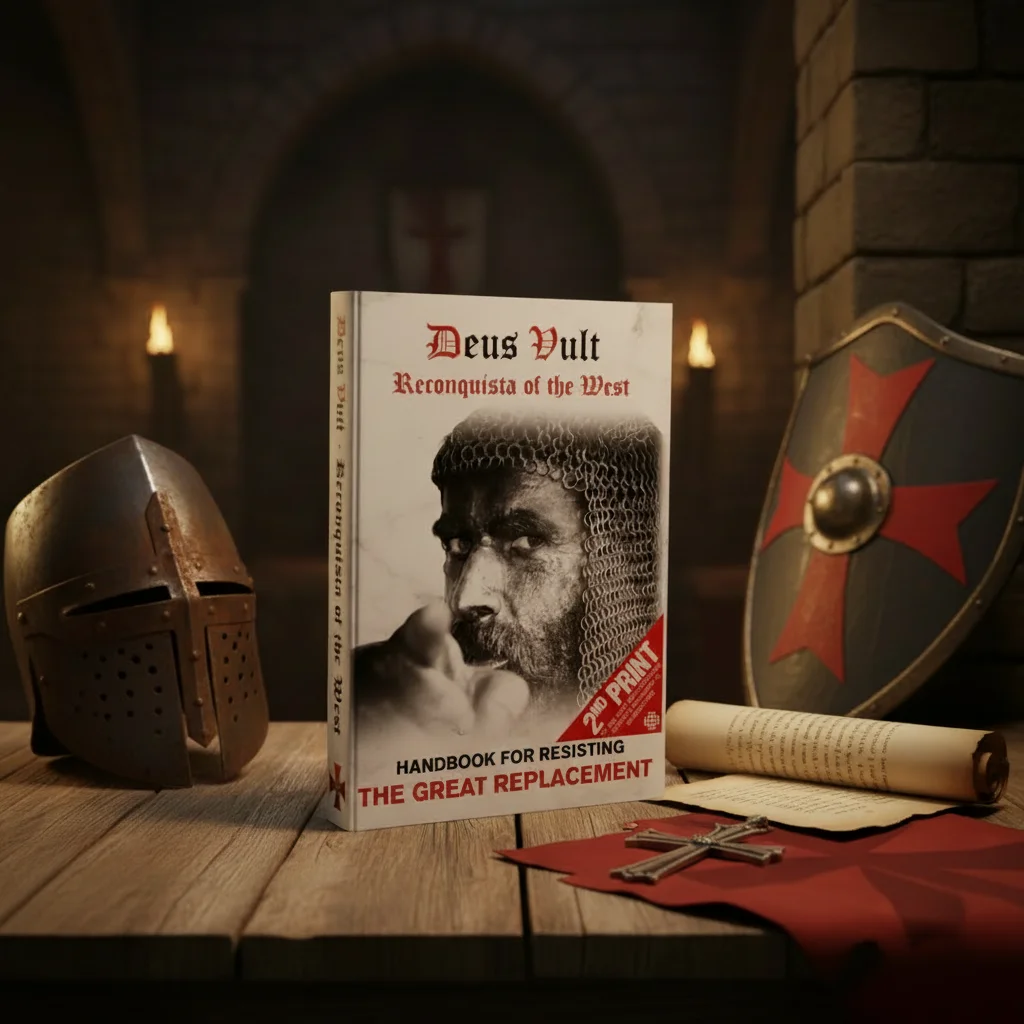

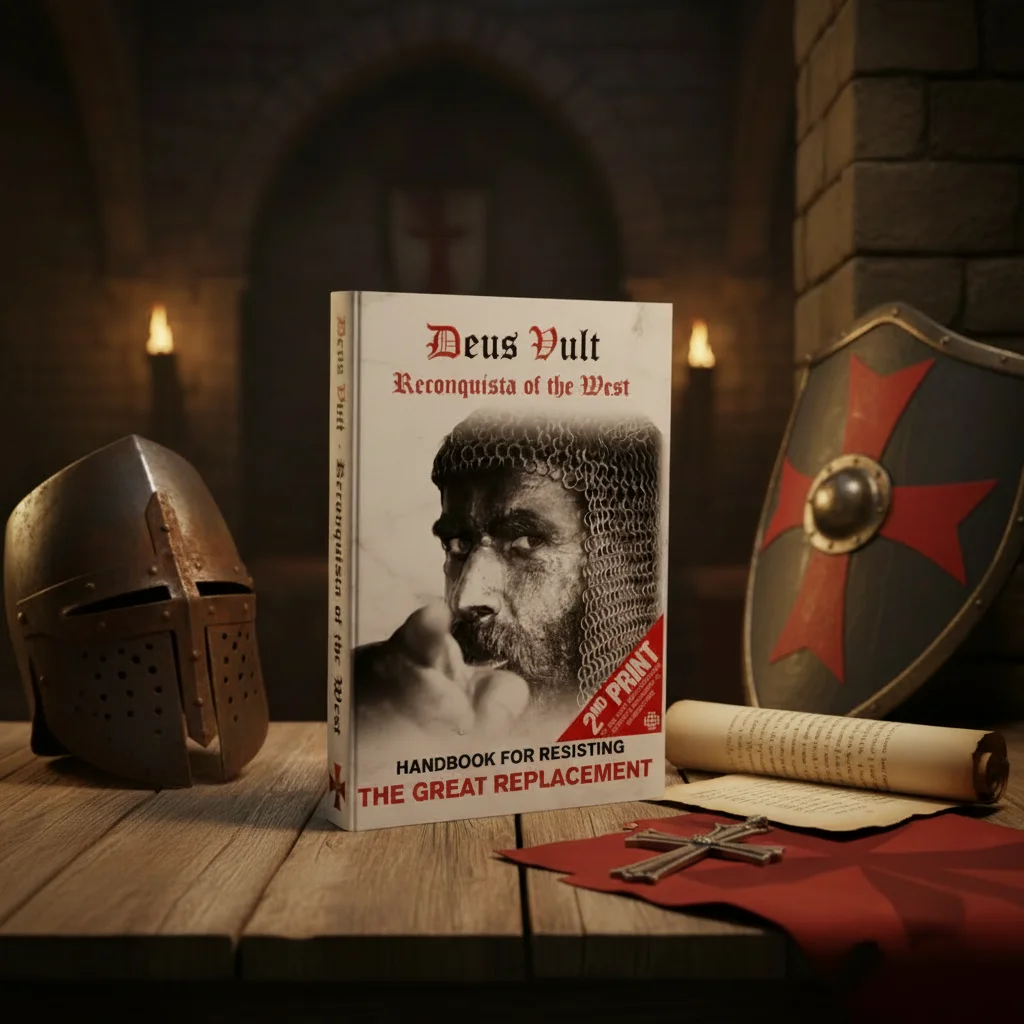
Though these are bound in two individual books, they are a series which is being referred to, in Latin, as Deus Vult, or God Wills.
The Great Replacement, and how to resist it, is actually the first of these. This book came out as COVID was settling into a lockdown formation. It is therefore interesting since it was on the frontline of information stating that COVID was mostly a scare tactic utilized in order to make civilization assume a different form. In some cases, people were outright murdered in that they were rushed to nursing homes that they did not need care from only to be exposed to sick people who did need such care. In others, it is a gentler nudge in the direction of not owning anything and rescuing the planet in the name of being green.
The big identity shift offered by this book, however, involves a different kind of Christianity that the author, who calls himself the Grand Scrivener, refers to as "muscular Christianity". The idea behind the appellation is that Christian men ought to be defined by deeds that are manly and should take actions in the world to alleviate the suffering of their fellow Christians as well as those who are less fortunate. A larger portion of the argument for a kind of strength arising from Christianity is that it naturally tends to mercy toward the weak and helpless whereas many other world religions, particularly Islam, do not share the same emphasis as a priority or as a necessity.
An argument is proffered that when times get rough, it is usually people with muscle who come in and fill the vacuum left behind by power dynamics that have vacated their traditional roles. Generally speaking, the author notes that these tend to be young men and often they are of a sort that are pushed to the edge of the civilization they occupy because they are seen as gruff characters.
It does not require much of an inferential mindset to understand that the argument is going to be going toward having children since children are where young men are made.
What might prove surprising, however, is the author's willingness to align with Hezbollah more than the state of Israel. Indeed, the author comes close to a kind of replacement theology that the Jews in Israel really are not Israel, but that the Christian Church actually is. There is more than a little posturing and discussion about Zionism and how it is an undesirable thing that is not Biblical for the simple fact that no one knows when the Day of Judgment is supposed to arrive. This overlooks the point, though, that should the Day of Judgment be now, it would make the author potentially wrong about the Jews in Israel and what their role is since God can take those who occupy Zion and either remove them or exalt them. Historically, previous to World War II, this is exactly what happened as early settlers came to Israel and began to settle there in the late 19th century. Eventually, this act fomented into World War II, and some of the people who settled there remained whereas many, many more new people were brought to the land in a prophetic fulfillment of returning Jewish people back to the land of Israel.
The author does not do a great job distinguishing between a cultural Zionism that feels like there is some kind of Jewish dominance behind it versus the spiritual Zionism that is the actual Zionism that every believer wants. It begs the question that if the author believes he has a bead on the actual spiritual Zionism, why is it the case he does not appear to live there? Indeed, any Christian believer that calls itself the real Israel that is not living in Israel must, sooner or later, ask themselves if they actually believe that, or if they just want to ignore the actual inhabitants of Israel in the form of the Jewish people who are there now.
With both of these huge red waving flags ignored, though, the rest of the book contains information that most any believer can agree upon. Sometimes it is wise for a believer to ignore certain pieces where they do not align for a greater good with other believers. Sometimes, one has to engage the person on the points. The second act usually results in fracturing and splintering, which is why most believers avoid the confrontation. On the other hand, if one does not challenge the growth of a tree once in awhile, how does one know the wood is not rotten?
The author, at another point toward the end, has some advice to give young men that has an interesting flavor to it. While it is not necessarily wrong, it also is not also entirely right and can be misconstrued. Much of the advice is fatherly in nature, and is indeed passed between some sons and fathers. The book probably is not the best conduit for it, since it lacks the nuance of interaction a face-to-face offers.
The second book in the series, The Great Reset Resistance, is a recapitulation of some of the points in the first book but in finer detail. Easily the first half makes the case that one should not expect to find themselves in a cushy existence if they start resisting and succeeding in their resistance. There are many stories of Christian martyrs and how they died. A large portion of the work discusses the Covenanters in Scotland and what happened to them. Likewise there is an exploration of what happened to many Catholics in Ireland during "the penal times." The reason these stories are advanced is to prepare a person for the kind of persecution they might need to expect should they find themselves in a complete crackdown on their religious freedom.
The next part deals with the importance of having children, and making sure one's resolution remains firm to be free. There is a segue into what to expect with currency crashing and what to do about it, and the solution promulgated in the text relies heavily on Bitcoin being an answer to that predicament. Finally, there is a more hands on what to do about it, which includes growing your own food and homeschooling as much as possible and moving out of large cities. There is even a guide on what to do if you find yourself in jail.
What you do not find advocated in either work is a call to arms. The opinion of the author in the second work and the first is that such thinking is more likely to get a valuable young man killed because it is not a good time for such an uprising to take place. Later on down the road though, when the birthrate has shifted, well, it might be a different story. So while the Christianity here is "muscular" it is not intrinsically violent, but it does note that there is a marked effort to replace white people with Islamic sorts of believers and that the best thing to do, for now, is resist that pull until the shifting groundwork of the spiritual war through the flesh of the believers is made more manifest by having more flesh in the form of future fighters and soldiers in the ongoing cultural war. The call here is more to propagation of children than stockpiles of ammunition. The author chastises people who are believers who have not had children and decries them as being extremely selfish. One wonders, at times, if the author remembers all the people in the Bible who either did not have kids, adopted kids, or wound up having kids in some unexpected way like Joseph and Mary. He seems to only see through the lens of soldiers on the field which is a valid, but myopic, way of seeing the totality of the battle. Of course, if the main aim is to achieve a "muscular Christianity" then these observations make more sense as the Bible does say that the strength of a given nation is often measure by the children it has. Egypt certainly feared the numbers of the Israelis under Moses. However, we are told not everyone followed Moses who was Hebrew. This is the part that the author overlooks. Not all children follow in the steps of their parents, although he does admit the possibility that this might be a scenario of concern. Mathematically, he argues though, that the odds are that more believers will be made by having children by believers than those who will fall away who also had believers for parents. It is an interesting thought to consider.
The theme which is greatly emphasized is being able to pass on one's stories and culture to their children such that it is harder to erase whether it be from "communistic" sorts, (which the author points out has a Jewish root) or Islamic, or some part of Klaus Schwab's Great Reset apparatus. There are plenty of targets that wish to replace the predominate Christian culture. A group that is not named so often, though, are the wealthy in general. There are wealthy people in specific. Wealthy people in general are only lumped in as much as they are interested in participating in some Great Reset dynamic.
A stylistic notice through both works is that there are some glaring typos. The first book probably has these because there was a rush to get it out, but the second has some inconsistencies that a decent proof reader would catch. It is likely these books are coming from an independent press since no ISBN is present on either book. Sometimes independent presses are more concerned with getting anything out at all than they are to make sure that what they have written is free from typos. Whether this is the case here is unknown, although the second book claims to be in the second printing so it has had some time for readers to notice these little details. Perhaps no one cares to point them out, or perhaps no one cares to fix them. After all, if your book is selling enough to make it to the second reprint, you are probably doing something right.
There is much here for a believer to contend with, and while a mature believer is not going to be swayed by certain points presented by the Grand Scrivener that are not necessarily the entire Biblical truth on a given subject, a newer believer might find themselves swept up by the arguments presented in order to feel like they are in the "strong club" of Christian believers. One supposes that Christ is beefy enough to deal with this dilemma, but it is an issue worth touching on. The Grand Scrivener is a highly persuasive writer, and he knows how to get the blood boiling. One has to make sure, though, that the blood is boiling in the direction of the right fight. One does not want to stand before the Judge of Judges and explain how they did not support Israel because they thought they were the real deal while everyone else were posers.
More of these kind of books should exist, though, and on the balance the Grand Scrivener probably does more good than harm. Doing something at all in regard to standing up to the psychos who want to rule the world has to earn some plaudits somewhere.
You should also read:
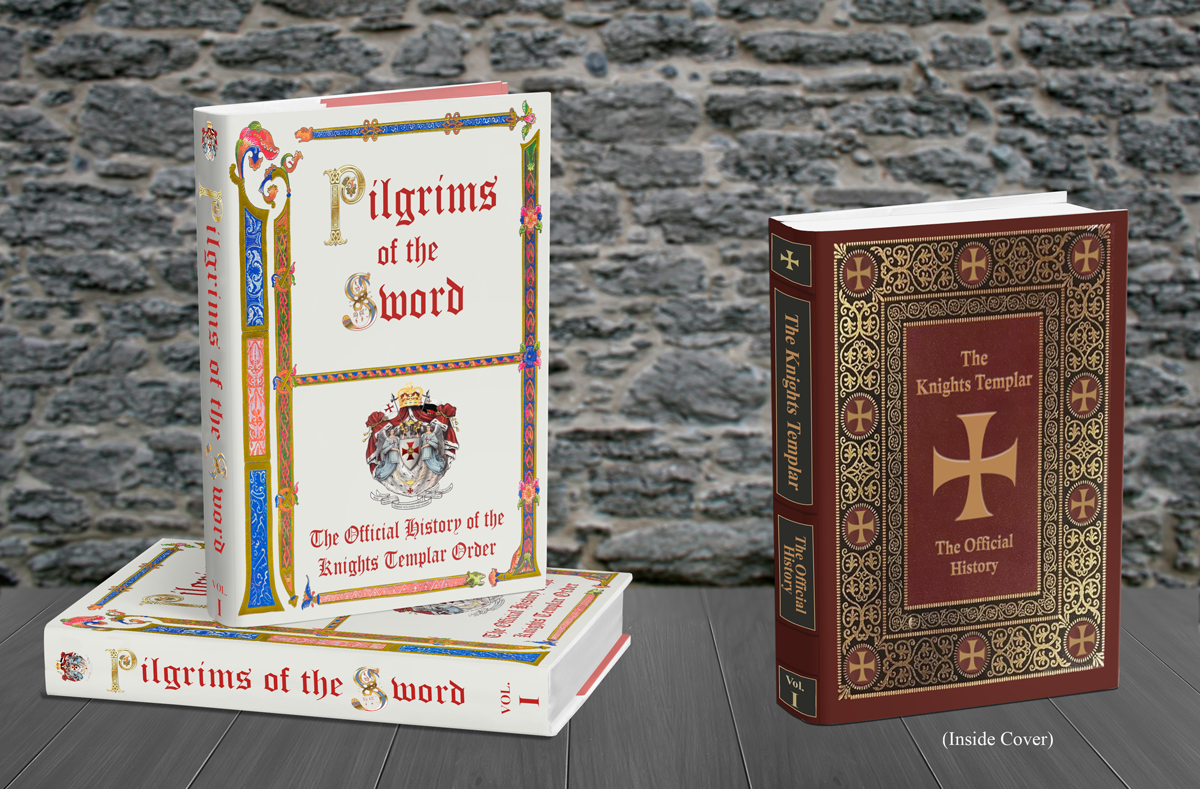
2026-07-22 Pilgrims of the Sword by the Scrivener
July 22, 2026 Pilgrims of the Sword by the Grand Scrivener proclaims itself to be the official history of the Knight's Templar Order. To be specific, this history is in its first volume, and more volumes are anticipated as this tome brings us up to…
Continue reading...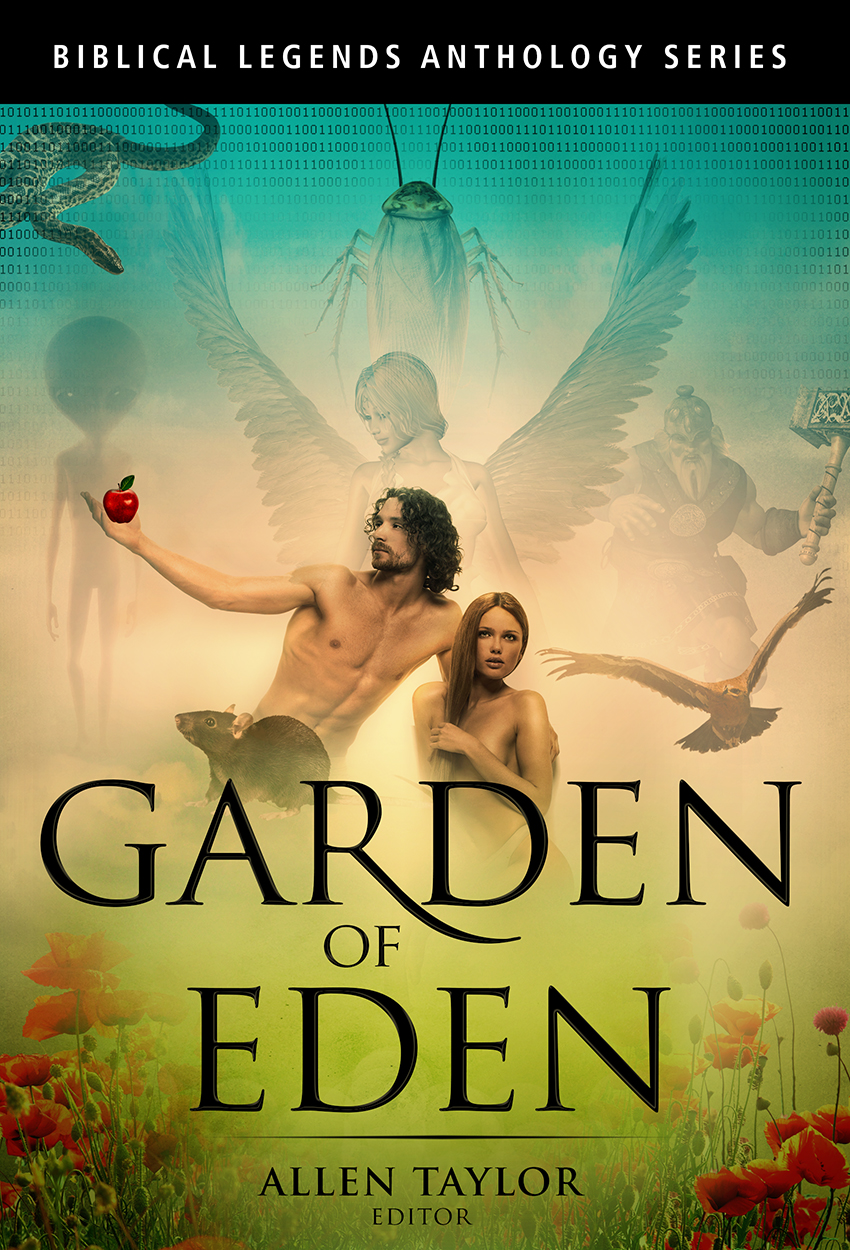
2024-01-30-The Biblical Legends Anthology Series by Allen Taylor
ISBN: 9798218033958 January 30, 2024 Mr. Allen Taylor did something bold. He decided to publish an anthology. If that in and of itself was not enough, he decided to publish stories about Biblical themes without the usual characters. The settings all feature moments of punishment:…
Continue reading...