
2026-06-25-Our Story of Eagle Woman Sacagawea -Sacagawea Project Board of the Mandan, Hidasta and Arikara Nation

June 25, 2026
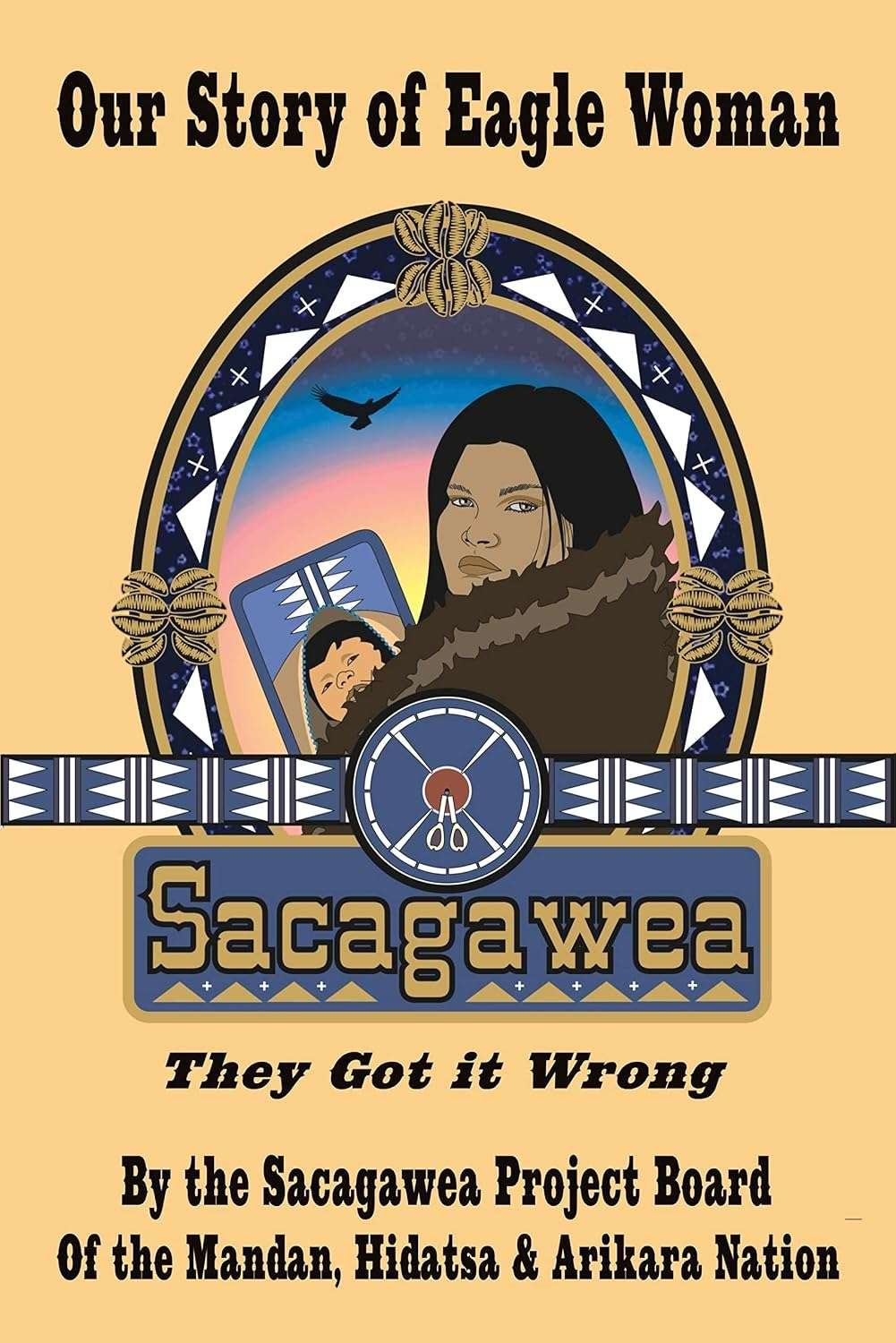
Everything you think you know about Sacagawea, according to the elders of the tribes represented here—namely the Mandan, Hidatsa and Arikara Nation—is wrong. A good place to start with is her name Sacagawea is an incorrect name, and means she who pulls the boat/launches the boat, and is a mistranslation of her actual name brought about by her sometime husband, the Frenchman known as Charbonneau, who was in turns abusive toward her and a bad translator of her language. Her actual name was Sakakawea, or Bird woman, which everyone agrees meant Eagle Woman in particular.
Next, she was not Shoshone, but got tangled up in an inter-tribal magic war between the Snake clan chief, who had a magic hoop they could use to see whomever they wished whenever they wished, and a Wolf clan chief, who would hear the news from the wolves according to their howls. She was of the Crow clan, which was a relation to the Hidasta. Her father may have been the same chief who would talk to the wolves to get the news. Her own medicine path, though, was a snake path—as was that of her brother. This snake medicine came about through the efforts of the Snake clan chief, who used his hoop to ascertain who would be strong enough to use the medicine he had learned. He settled on Eagle woman's brother—the son of Eagle woman's father—the same father who would get his news from the wolves.
Because both Eagle woman and her brother, Cherry Necklace, (also possibly know as Walks at Dusk) knew snake magic to the point of doing some Moses level stuff with swirling sticks (they turned into snakes when he did this), people assumed that this meant they that were Shoshone whose tribal name translated as snake. Instead, the Shoshone were the kidnappers of both Eagle Woman and Cherry Necklace. Eagle woman got away with some magical wolf intervention, Cherry Necklace did not. (apparently by choice) The snake medicine they both practiced was how to "turn things around" which probably meant having the ability to cause events to transform in a different direction than they were progressing. When Eagle woman hugged a Shoshone, it was probably her brother who was kidnapped and remained a Shoshone in order to learn the snake medicine of the chief. This explains why the mistake of thinking this meant she was a Shoshone, when taken in balance with Jean Baptiste Charbonneau's poor translation of her medicine path versus her tribal identity.
Eagle Woman of course acted as a guide to Lewis and Clark. Everyone agrees on that. She did not die early, however, but instead due to a fondness for coffee was shot along with a woman named Otter Woman who was her daughter in Montana by a place called Glasgow which was a trading post. She was at the trading post to get coffee, which she loved the smell of and would rub on her head. This death at the hands of the Sioux nation happened in 1869. This date is much, much later than the commonly purported death date in 1812.
These are the attestations of many elders who authored this work on Eagle Woman. There are many other stories here that boggle the Western, non-magical mind. For instance, there is a tale of an otter fur which turns into an actual otter, as witnessed by many, with some healing abilities, and wolf furs stuffed with sage to help in the translation of the news from the wolves.
As America begins celebrating its 250th anniversary, it is clear why the elders say that "they"—in this case tellers of commonly held historical tales—"got it wrong". The whole thing is nearly a comedy of errors of almost correct understandings and doings that veer off to make a mess of the whole account. Though the elders have been trying to correct this for a long time, most often they are dismissed with one excuse being "it costs too much to try to fix it now." The physical paperback version of this book did it for the price of fifty dollars. While it was higher than many other physical paperbacks of size and length, it was worth it.
You should also read:

2023-09-04-The Hut Six Story By Gordan Welchman
ISBN 978-0947712341 September 4, 2023 One wonders what Gordon Welchman might have done or been if there had not been a war, and had he not been invited to Bletchley Park to break German codes. He might still have taught the first computer programming course.
Continue reading...
2023-07-31-The Secret History of the American Empire by John Perkins
ISBN 978-0452289574 July 31, 2023 Back in 2007, John Perkins was busy writing about some deep, dark conspiracies that grace the pages of his book The Secret History of an American Empire. Much of what he had to say concerned the NSA, hitmen and regime…
Continue reading...